What is rafting on the Kali River like?
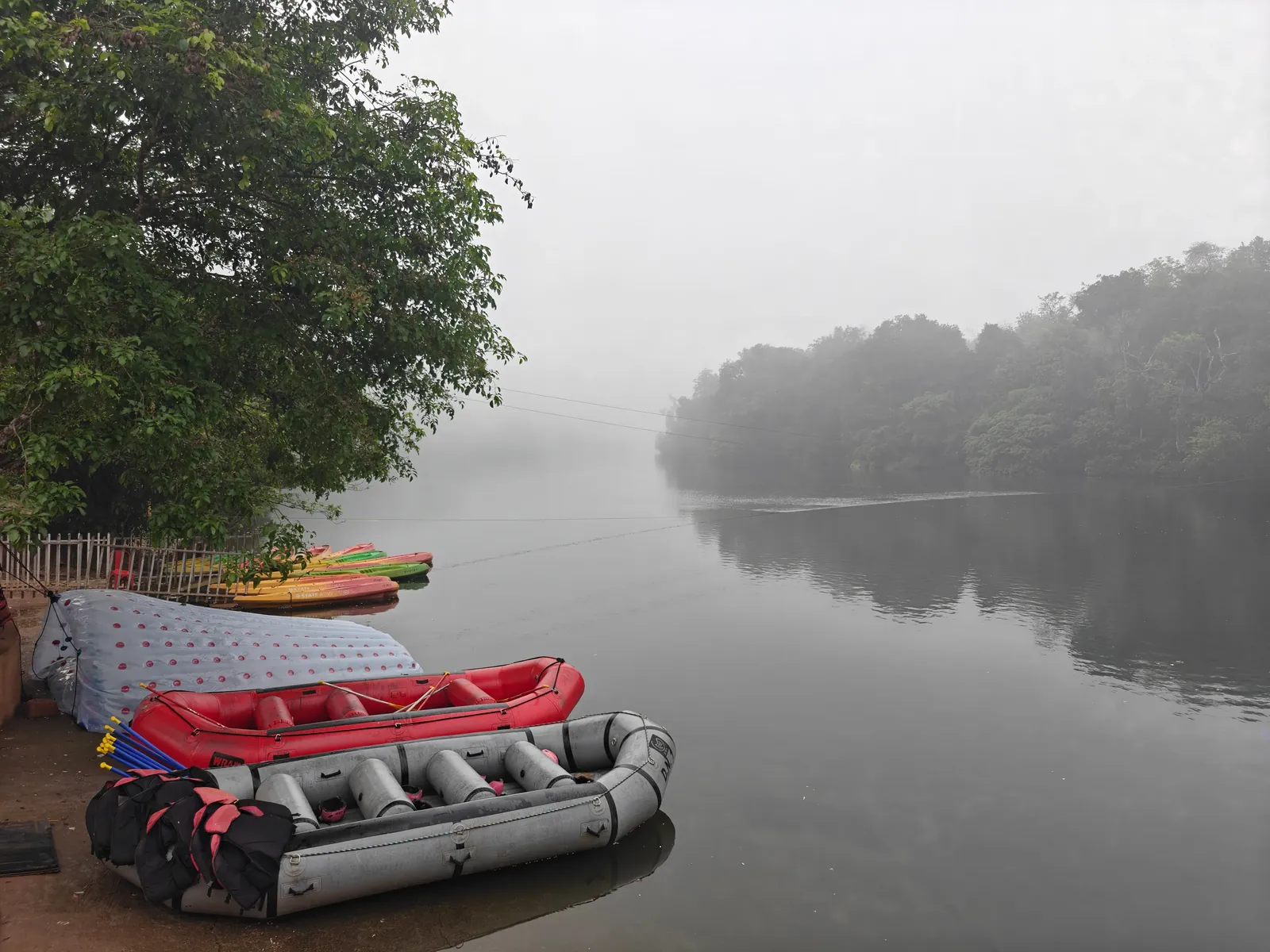
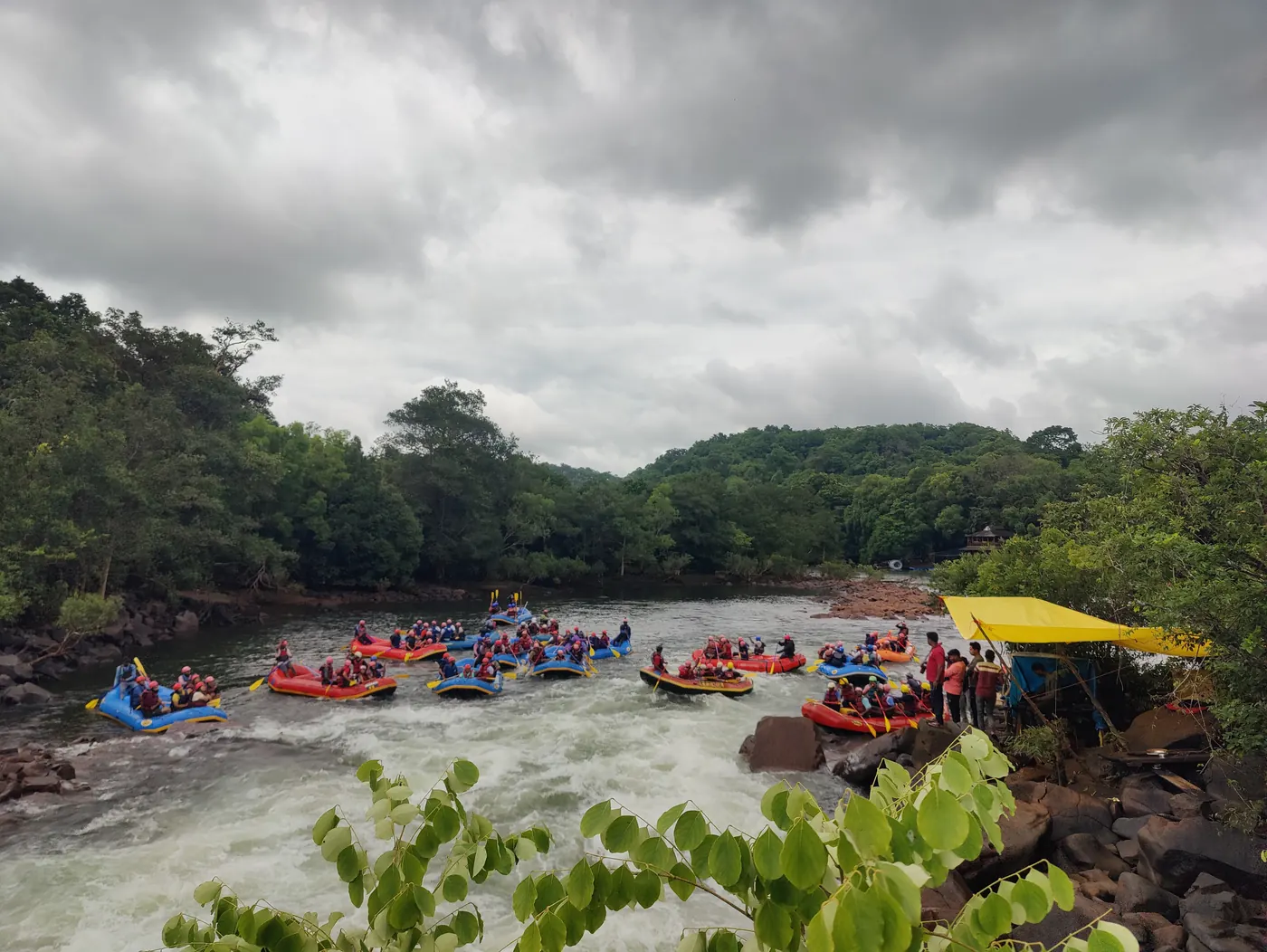
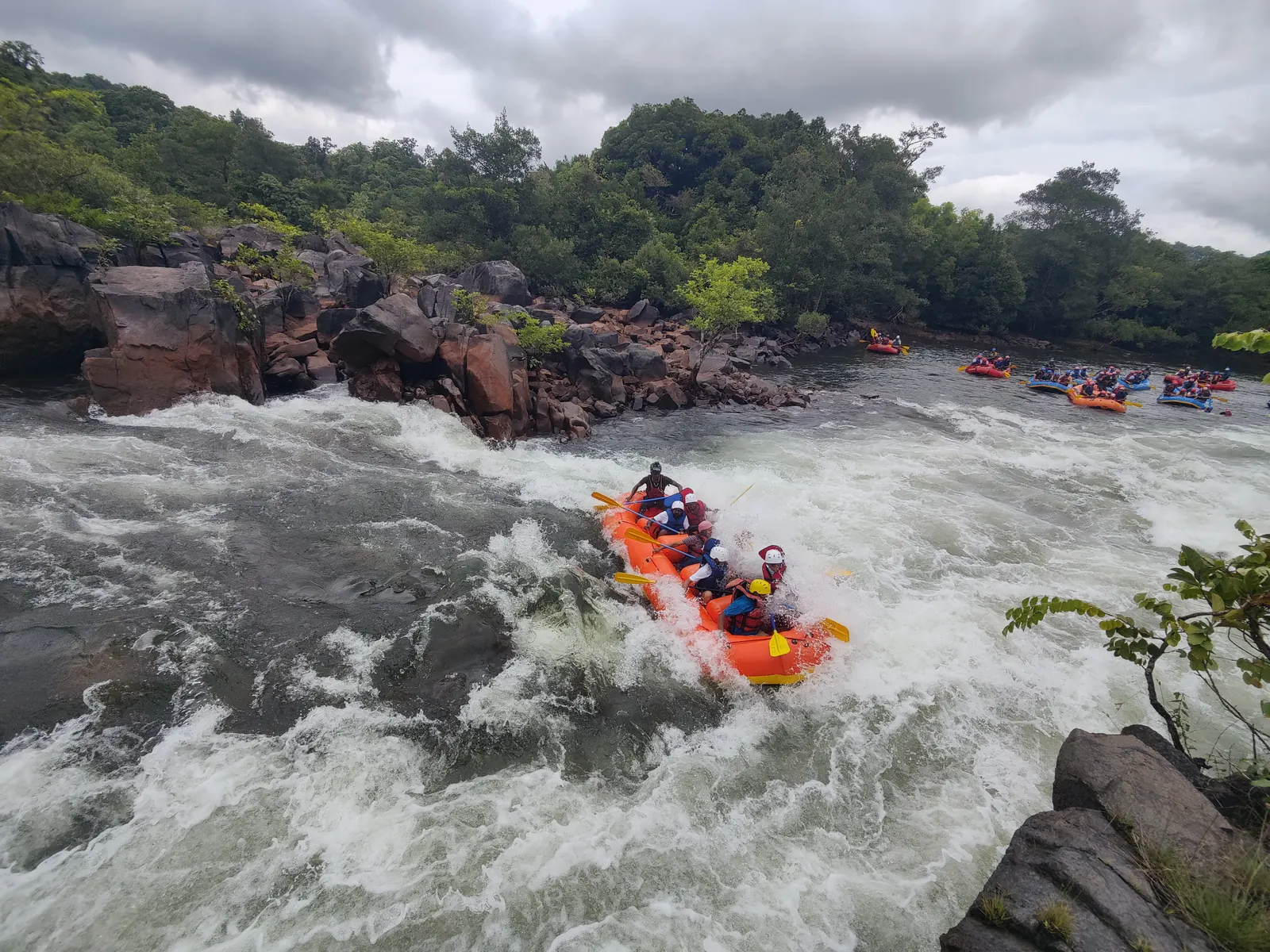
The Kali River at Ganeshgudi offers genuine white-water — Class II–III rapids, not a lazy float. You sit in an inflatable raft with your group, paddle on your guide's commands and ride through waves, drops and calm pools surrounded by Western Ghats forest.
Every raft has a certified guide who steers and decides when to paddle hard, when to hold on and when to rest. You do not need previous experience — the guide does the reading of the river, and your job is to follow instructions and enjoy it.
How a rafting session works, step by step
Knowing what to expect takes the nerves out of your first time. A typical session runs like this:
- Arrive and register: you check in, sign the safety declaration and get sorted into a raft group.
- Gear up: you are fitted with a life jacket and helmet and handed a paddle.
- Safety briefing: your guide explains how to sit, how to hold your paddle, what to do if you fall in and the commands you will hear.
- Launch: you board the raft and push off into the current.
- The run: a mix of rapids, calm pools and (often) a chance to float or swim in safe sections, depending on the route and conditions.
- Finish: you exit the river, hand back your gear and dry off.
Choosing your route
We run three rafting routes. Prices are what we charge at the time of writing.
- Short Rafting — 1 km, about 40 minutes, from ₹700, Beginner. Best for first-timers, families and anyone who wants a quick taste.
- Mid Rafting — 5 km, about 1.5 hours, from ₹1,350, Moderate. More rapids and more time on the water.
- Long Rafting — 11 km, about 3 hours, from ₹1,750, Moderate. The full expedition through dense forest with challenging rapids.
Safety: gear, guides and the briefing
Every rafter gets a life jacket, helmet and paddle. Before you launch, your guide runs a safety briefing covering how to sit, how to paddle, what to do if you fall out and the commands you will hear on the water. Pay attention even if you have rafted before — every river is different.
- Wear your life jacket and helmet at all times on the water.
- Follow your guide's commands immediately — they can see the rapid ahead and you cannot.
- If you fall in, stay calm, keep your feet up and toward the front, and let the jacket keep you afloat until the guide helps you back.
- Do not stand up in the raft or try to grab rocks.
- Keep your paddle grip safe — hold the T-grip so it does not hit anyone in a bump.
The commands you will hear
Guides use a short set of calls so everyone reacts together. The exact words vary, but you will typically hear instructions such as forward paddle, back paddle, stop, and get down or hold on when a big wave is coming. The key is to respond quickly and together — rafts work best when everyone paddles as one crew.
What to wear and bring
You will get wet, so dress for it: quick-dry shorts or track pants and a t-shirt (avoid cotton jeans, which stay heavy and cold), and secure footwear such as sandals with a back strap or old sports shoes. Skip jewellery and dangling accessories, and bring sunscreen and a change of clothes.
If you want to carry a phone, use a waterproof pouch, and keep anything valuable in the locker or with a non-rafting friend. Dry bags are provided on the longer routes.
Fitness, swimming and who should skip it
You do not need to be an expert swimmer, because the life jacket keeps you afloat — but being comfortable in water helps. The Short route suits most families and beginners.
If you have a heart condition, back or neck problems, are pregnant or have any medical concern, check with us and your doctor first. Ask us about age and weight limits for the route you want, since these can vary by route and conditions.
Is the river running today?
Rafting on the Kali depends on water released from the upstream dam, so availability can change from day to day. We check live conditions and tell you upfront if rafting is paused. To plan around it, read our best time to visit Dandeli guide.
Ready to go? See route details on the rafting in Dandeli page or book your slot.